
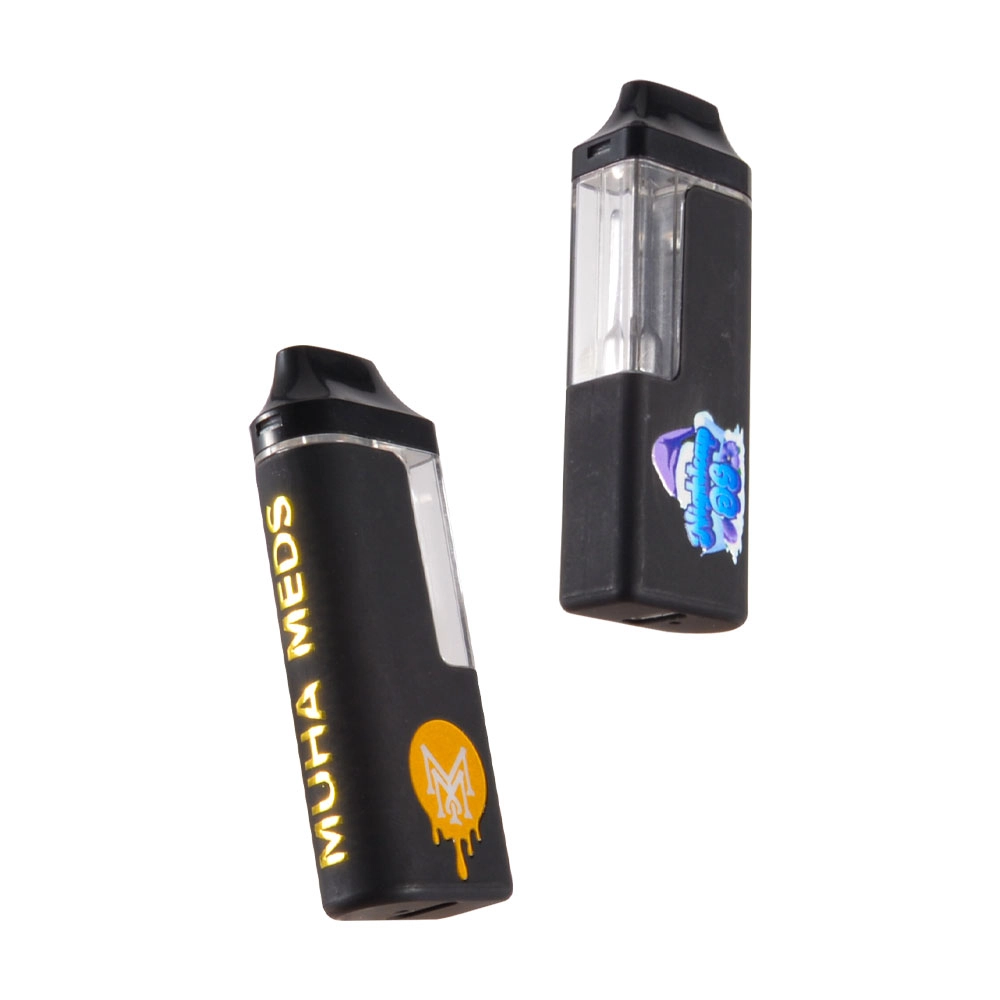
“muha meds vape” 1 g vs 2 g vs 3 g: what wholesalers actually compare at first touch Empty-Hardware Only
This guide shows how wholesalers evaluate muha meds disposable-style empty shells at first touch—from form factor and electrical safety to packaging, logistics and traceability—without implying any filled product use.
Scope: hardware only. No oil, no nicotine, no THC. Nothing here promotes filled products.
1) What “1 g / 2 g / 3 g” means when you source empty shells
In empty hardware sourcing, the “g” label maps to the intended reservoir class and enclosure volume envelope—not to any filled substance. Practically, higher-class housings (2 g / 3 g) tend to pair with larger cells, longer run-time expectations, and more robust packaging. Treat it as a structural and electrical design space, not a claim about contents.
2) The “first-touch” checklist wholesalers actually run (12 items)
A. Form factor & ergonomics
- Grip & pocket fit Palm fit and pocket extraction without pressing the fire/airflow path.
- Port geometry USB-C clearance; strain relief; debris protection.
- Screen/window If present, window bonding and scratch resistance (cosmetic AQL).
B. Electrical & battery sanity (no load)
- Protection IC present: over-charge/over-discharge/short-circuit; idle current within spec.
- Cell identification matches documentation; label legible and traceable.
- Charge handshake (USB-C) stable on common adapters/power banks.
C. Packaging robustness (small-parcel reality)
- Tray prevents port/switch impact; tamper seals intact after drop/vibration simulations.
- Cosmetic AQLs defined post-test to prevent DOA credits eating margin.
D. Compliance posture & logistics plan
- Copy positions device as ENDS components/parts only if unavoidable; avoid health/flavor claims.
- Carrier feasibility confirmed (USPS prohibitions with narrow exceptions; UPS/FedEx prohibitions).
- Returns/waste SOP (Li-ion & e-cig waste segregation) for downstream partners.
E. Traceability & anti-diversion
- GS1 identifiers on master/inner; serialized 2D (Digital Link) ready for Sunrise 2027.
- Lot/date code retention ≥ 3 years; quick recall mapping.
F. Documentation reality
- UL 8139 (Ed.2, 2024) report/cert matches the exact BOM & enclosure.
- IEC 62133-2 cell-level report for the actual cell model.
- UN 38.3 Test Summary (2024 rev. format) with exact model codes.
3) 1 g vs 2 g vs 3 g: comparison matrix for empty shells
| First-touch metric | 1 g class | 2 g class | 3 g class | What to log on samples |
|---|---|---|---|---|
| Enclosure volume & grip | Small/light; pocket-friendly | Balanced; broader palm area | Largest; check hand fatigue | Width × thickness; edges; slip risk |
| Battery & runtime expectation | Smaller cell; ensure protection IC | Medium cell; thermal sanity checks | Largest cell; confirm charge time | Cell model; idle current; over-temp behavior (no-load) |
| Port durability (USB-C) | Cycle test basic | Cycle test + strain relief | Cycle test + torque/lever arm | Insertion cycles; wobble; PCB anchor design |
| Screen/window options | Rare/minimal | Common | Common; bigger window | Scratch test; bond line; light bleed |
| Master-case packout | Higher count per MC | Mid count | Lower count; heavier MC | Tray lock; corner crush; seal integrity after ISTA 3A |
| Shipping feasibility | Lock non-USPS plan; UPS/FedEx policy check; forwarder accepts UN 38.3 TS | Carrier statement; TS file; battery handling mark rules | ||
| Traceability | UPC + 2D (GS1 Digital Link) dual-mark during Sunrise 2027 transition | GTIN mapping; lot/serial per inner/master | ||
Tip: build a numeric score (0–3) per row; accept only suppliers scoring ≥ 80% with zero critical fails on safety docs and packaging.
4) Compliance pillars to verify (with sources)
- FDA ENDS components/parts posture: keep language hardware-only; avoid health/flavor claims. Reference: FDA ENDS overview; PMTA guidance components/parts list.
- Carriers: USPS generally non-mailable (narrow exceptions); UPS/FedEx prohibit vapes—confirm logistics before quoting. Reference: USPS final rule; UPS & FedEx policy pages; 2025 enforcement context.
- Electrical/Battery: UL 8139 (Ed.2, 2024), IEC 62133-2 cell tests, UN 38.3 Test Summary (rev. 2024) required for transport.
- Packaging: ISTA 3A small-parcel simulation (drop/vibration/heavy handling) to set DOA-safe AQLs.
- Traceability: GS1 Sunrise 2027 → dual mark (UPC + 2D/Digital Link) until POS full acceptance.
- Returns & Waste: EPA guidance for e-cig & Li-ion handling—train shops not to trash returns.
- Enforcement climate: FDA authorized list remains limited; SCOTUS 2025 decisions underscore FDA discretion—mind your wording even for empty shells.
5) Paperwork to collect before deposit
- UL 8139 (Ed.2, 2024) report/cert letter matching your BOM & enclosure.
- IEC 62133-2 cell-level safety report for the exact Li-ion cell model.
- UN 38.3 Test Summary (revised 2024 format) with correct model codes.
- ISTA 3A evidence for finished packs (method, drops, vibration, acceptance criteria).
- GS1 plan (GTIN assignment + 2D/Digital Link) aligned to Sunrise 2027 dual-mark.
- Carrier plan reflecting USPS/UPS/FedEx restrictions; forwarder acceptance confirmed.
People can find wholesale vape shop in following pages: 2g disposable vape | wholesale muha meds 2g | muha meds master case bulk
0 Comments