
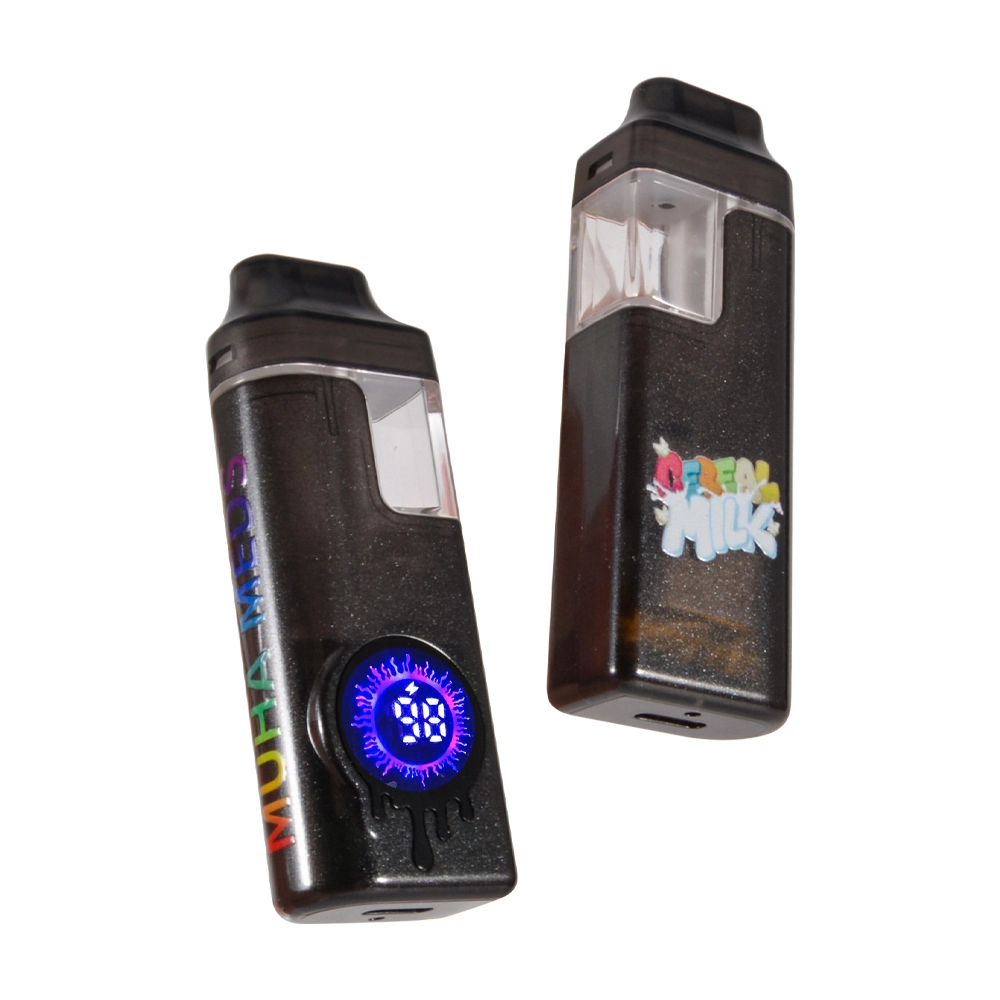
What materials, coils, and batteries are used in your empty Muha devices, and do you have test reports?
Keyword focus: wholesale muha disposable
Scope & disclaimer: We sell empty, unfilled Muha-style AIO shells—no oil, no nicotine/THC, and no official affiliation with third-party brands. Specs below describe our typical SKUs; exact materials can vary by model and purchase order.
1) Materials we typically use (by component)
- Mouthpiece / tank window: PCT-G copolyester or PC for clarity and impact toughness; PCT-G is a clear co-polyester noted for low extractables and stability in demanding applications. PC offers good impact and baseline chemical resistance (clean with non-alkaline agents). :contentReference[oaicite:0]{index=0}
- Main housing / chassis: PBT or ABS in many models—engineering thermoplastics used widely for electrical housings thanks to electrical insulation, dimensional stability, and toughness. :contentReference[oaicite:1]{index=1}
- Metal interfaces / airpath parts: Stainless steel grades (commonly 316L) for corrosion resistance and formability. :contentReference[oaicite:2]{index=2}
- Heater & wick (see next section): Porous ceramic (alumina) matrix paired with a resistive conductor (mesh or wire). Alumina is valued for electrical insulation, heat resistance, and chemical stability. :contentReference[oaicite:3]{index=3}
Substance controls in electronics: As electrical/electronic equipment, our devices observe EU RoHS substance restrictions and associated test methods (IEC 62321 family) that underpin CE marking declarations. :contentReference[oaicite:4]{index=4}
2) Coil architectures we support (ceramic + mesh/wire)
- Porous ceramic atomizer (Al₂O₃): A sintered alumina matrix wicks viscous oil by capillarity and thermally isolates the heater—chosen for stability and wear resistance. :contentReference[oaicite:5]{index=5}
- Stainless-steel mesh (often 316L): Fine SS mesh laminated to the ceramic for fast, even heating. 316L is a molybdenum-alloyed austenitic steel with strong corrosion resistance. :contentReference[oaicite:6]{index=6}
- NiCr (nichrome) resistance elements: Classic nickel-chromium resistance alloys used across heating applications for high resistivity and oxidation resistance. :contentReference[oaicite:7]{index=7}
- FeCrAl (Kanthal®-type) options: Iron-chromium-aluminium resistance alloys with very high oxidation resistance at temperature; available as wire or ribbon for heaters. :contentReference[oaicite:8]{index=8}
3) Batteries we use
Our empty AIOs incorporate sealed, rechargeable Li-ion cells (nominal 3.7 V) sized to the device format (typ. 280–650 mAh). Cell safety is demonstrated to IEC 62133-2, device-system safety to UL 8139, and transport safety via UN 38.3 Test Summary. :contentReference[oaicite:9]{index=9}
Why these standards matter: IEC 62133-2 covers rechargeable Li-ion cell safety; UL 8139 evaluates the e-cigarette device’s electrical, heating, charging and protection systems; UN 38.3 is mandatory for shipping lithium cells/batteries and requires a standardized Test Summary for each design (updated guidance July 2024). :contentReference[oaicite:10]{index=10}
4) Do we have test reports? — Yes. Here’s the standard pack
- UN 38.3 Test Summary for each battery type used in the device (required by carriers/regulators for air & road). :contentReference[oaicite:11]{index=11}
- IEC 62133-2 (cell safety) test reports from an accredited lab, matching the exact cell model in your SKU. :contentReference[oaicite:12]{index=12}
- UL 8139 evaluation/certification (where applicable) for the device family’s electrical/heating/charging systems. :contentReference[oaicite:13]{index=13}
- RoHS compliance documentation (Declaration of Conformity) supported by testing per IEC 62321 methods; CE technical file on request. :contentReference[oaicite:14]{index=14}
- REACH Article 33 (SVHC) communication and, if triggered, SCIP notifications for EU market placements. :contentReference[oaicite:15]{index=15}
- GPSR-aligned product safety info (EU 2023/988): importer/EU economic operator details, traceability, and recall-readiness for consumer products (in force from 13 Dec 2024). :contentReference[oaicite:16]{index=16}
Note: In the U.S., FDA regulates ENDS components and parts (e.g., batteries, atomizers, displays) even when sold device-only; importers and distributors should align their documentation accordingly. :contentReference[oaicite:17]{index=17}
5) Typical spec ranges (illustrative)
- Fill volumes supported: 1 g / 2 g / 3–3.5 g models (hardware only, unfilled).
- Battery: 280–650 mAh; Type-C charging; protections (OCP, OVP, SCP) per design validated during UL 8139 evaluations. :contentReference[oaicite:18]{index=18}
- Heater intake options: multiple aperture sizes and porosities to match high-viscosity oils (post-fill partner will finalize). Alumina ceramic provides thermal stability and insulation. :contentReference[oaicite:19]{index=19}
6) How to proceed
Share your target SKU (box-style vs. bar), target viscosity, draw profile, and compliance destination. We’ll issue a model-matched data pack (UN 38.3 TS + IEC 62133-2 + RoHS/REACH + UL 8139 status) under NDA and prepare pilot units. For EU programs, we also support WEEE/EPR onboarding and Batteries Regulation labelling timelines. :contentReference[oaicite:20]{index=20}
0 Comments