
<!doctype html>
The Benefits of Using Empty Vape Cartridges for DIY Vaping (2025 TOFU Guide)
Keyword focus: empty vape cartridges · Audience: beginners & curious DIYers · Hardware-first education (no medical claims)
Updated: October 20, 2025What are “empty vape cartridges”?
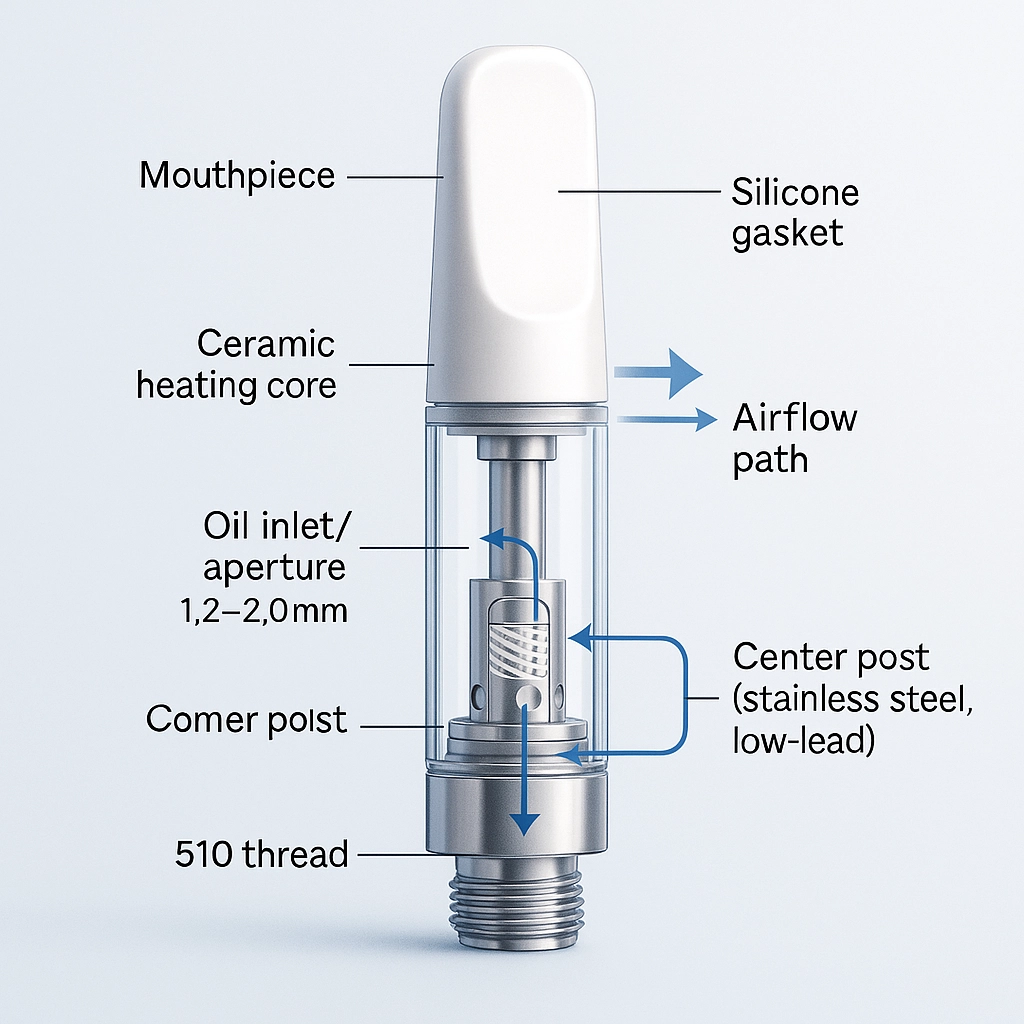
Empty cartridges are fillable 0.5–2.0 mL tanks—typically glass body plus a ceramic heating core—that screw onto a 510-thread battery. The 510 connector is the dominant cross-brand interface in 2025, so a single battery can power many different carts. Common capacities are 0.5 mL (testing or light carry), 1.0 mL (daily standard), and 2.0 mL (fewer refills).
Key benefits (why DIYers choose them)
- Flavor & feel you can tune. With empty carts you choose inert materials (borosilicate glass, ceramic core), airflow style, and the aperture (oil inlet) that matches your oil’s viscosity. Correct aperture sizing reduces dry hits, flooding, and clogs.
- 510 compatibility, less lock-in. The 510 spec is widely supported, so you can mix batteries and carts instead of being stuck in a proprietary pod ecosystem.
- Quality control over the inputs. You decide which oils to use and can ask for third-party lab reports (ISO/IEC 17025 COAs) for metals/solvents before filling.
- Cost structure that can save money. You buy hardware once (reusable 510 battery + empty carts) and oil separately, instead of paying a brand premium on every all-in-one disposable.
- Potential waste reduction vs. disposables. Reusing a 510 battery avoids throwing away a battery-containing device each time—helpful given growing concerns about disposable vape e-waste.
How to choose a good cartridge
1) Materials & build quality
- Tank: borosilicate glass is common for flavor neutrality and heat stability.
- Heating element: modern ceramic cores distribute heat evenly and are designed for viscous oils.
- Center post & seals: look for medical-grade stainless steel/low-lead alloys and quality seals to limit leaching and leaks.
2) Capacity & 510 compatibility
Pick 0.5 mL when testing a new oil, 1.0 mL for everyday use, and 2.0 mL if you want fewer refills. Confirm the cartridge is truly 510-threaded and compatible with your battery.
3) Aperture size (match to viscosity)
The oil inlets (apertures) are precision holes that feed oil to the core. As a very general starting point:
| Oil type (typical) | Suggested aperture | Why it helps |
|---|---|---|
| Thinner distillate / CBD blends | 1.0–1.2 mm | Prevents flooding with low-viscosity oils |
| Live resin / terpene-rich sauces | 1.6–1.8 mm | Balances flow & wicking for medium viscosity |
| Very thick rosin / heavy extracts | ≈ 2.0 mm | Improves wicking to avoid dry hits |
Always consult your cartridge manufacturer’s spec sheet; exact numbers vary by core design and the number of inlets.
4) Airflow & power
If you like a looser, cloudier draw, look for adjustable airflow or use a battery with multiple voltage settings. Start low and step up to avoid scorching.
Simple getting-started flow
- Prep the oil. For very thick oils, gently warm the oil container until it flows (do not overheat).
- Fill with a blunt-tip needle. Insert the needle along the tank wall—not into the center airway—and don’t overfill.
- Cap promptly and upright. Follow the vendor’s capping instructions so the vacuum lock forms correctly.
- Let it saturate. Stand the filled cart upright for ~15–30 minutes so the ceramic fully wicks the oil.
- Start low, go slow. Begin on a low-voltage puff; increase gradually to taste. Avoid “dry-firing” an empty or unsaturated cart.
Tip: Many modern 510 batteries include a short pre-heat to help with very viscous oils.
Safety & compliance you should know
- Independent lab reports: Ask for COAs from ISO/IEC 17025–accredited labs (metals, residual solvents, etc.).
- Device & battery safety: Look for devices tested to UL 8139 and batteries that have a UN 38.3 transport test summary.
- Child-resistant packaging (nicotine): In the U.S., liquid nicotine must meet PPPA (16 CFR Part 1700) child-resistance rules.
- Hazardous substances: Many buyers prefer RoHS-aligned hardware (limits Pb, Cd, Hg, etc.).
- Why quality matters: Research has detected toxic metals in some e-cigarette aerosols; using quality materials, avoiding overheating, and replacing aging hardware can help reduce risks.
- Disposal & e-waste: Don’t throw batteries in regular trash. Check local e-waste programs; disposables are a growing source of lithium battery waste.
Legal note: Laws differ by jurisdiction and product type (nicotine vs. cannabis). Follow local regulations and age restrictions.
Quick FAQ
Are empty cartridges reusable? Most 510 carts are designed for a single fill and are not intended to be cleaned and refilled repeatedly. If you want multi-fill hardware, consider a refillable tank system.
Why does my cart clog? Common causes are mismatched aperture/viscosity, cold temperatures, or long storage. Gentle pre-heat and slightly higher voltage (within safe limits) can help; correct aperture selection helps most.
Glass vs. plastic? Borosilicate glass is popular for flavor neutrality and chemical resistance; some cartridges use BPA-free engineered plastics—check the spec sheet and choose according to your priorities.
0 Comments