
Runty Cart Review: Analyzing Quality, Effects, and User Experience of This Popular Vape Option
Looking at what people call a runty cart and the broader category of runty carts, this review focuses on the verifiable signals that actually determine quality, consistency, and safety—regardless of packaging or hype.
What is a “runty cart” in 2025?
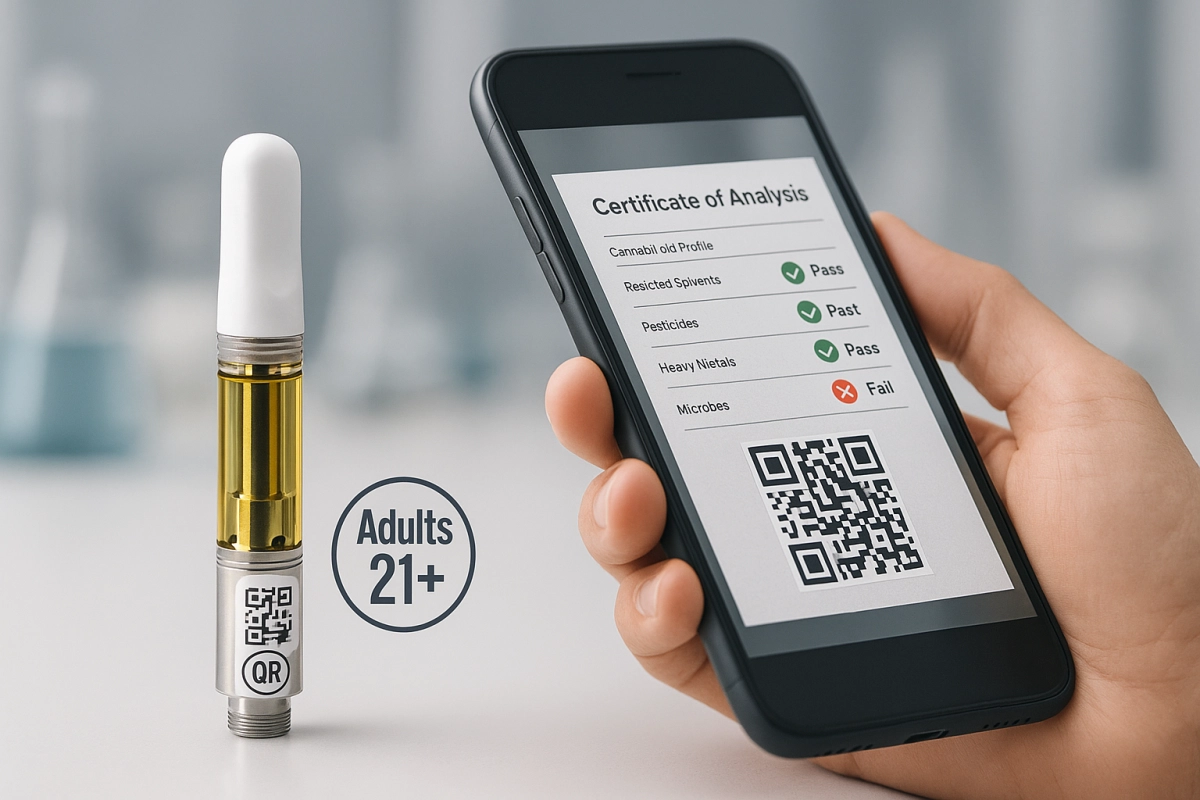
Across social and marketplace listings, runty carts typically refer to flavored THC 510 cartridges modeled after candy/dessert terpene profiles. Because packaging can be copied, identical-looking products may originate from very different sources—from fully licensed facilities to unregulated suppliers. As a result, brand aesthetics alone do not guarantee quality or legality. The only reliable approach is to verify the license number, batch/lot ID, and a batch-matched COA accessible via QR code.
Quality signals to check before you inhale
1) Regulatory status & COA
Confirm the product displays a valid state cannabis license number and that the QR code links to the lab portal for the exact batch. The COA should include cannabinoids, residual solvents, pesticides, heavy metals, microbes/mycotoxins, and foreign material checks.
2) Seed-to-sale traceability
Legal markets use track-and-trace systems (e.g., METRC). Each retail unit should be traceable back to its cultivator/processor and test results. If a seller cannot provide traceability, treat the product as high-risk.
3) Hardware build & materials
Look for reputable ceramic cores, stainless contact points, and tight gasket tolerances. Poorly finished metal parts may leach Ni/Cr/Pb into aerosol; this is why heavy-metal testing on the final filled cartridge matters—not just on raw oil.
4) Additives & cutting agents
Avoid products containing undeclared diluents or vitamin E acetate. Public-health investigations linked vitamin E acetate in illicit THC vapes to severe lung injury during the EVALI crisis; while the outbreak subsided, the lesson remains: avoid informal sources.
5) Recent recalls in your market
Licensed products can still be recalled. Check your state regulator’s bulletin for batches pulled due to improper diluents or failed contaminant tests. Recalls highlight why verifying batch details and COAs is essential.
Effects & consistency: what to expect
Expected effects should follow the COA’s potency and terpene profile (e.g., limonene/terpinolene often perceived as more uplifting; myrcene/linalool more relaxing), but individual response varies. Counterfeit or unregulated carts may misstate potency, so predictions are only useful when the COA precisely matches the package and is verifiable via QR code.
Consistency depends on formulation (distillate vs. live resin/rosin) and hardware (wicking aperture, coil). A well-made cart provides smooth draws, minimal clogging, and stable color/viscosity at room temperature. Watery, separated, or excessively dark oil is a red flag.
Safety & compliance: what “good” looks like
- Residual solvents: Many states follow pharmacopeial-style limits with strict ppm caps by solvent class (e.g., very low limits for Class 1 solvents). Review the solvent column on the COA.
- Comprehensive testing: Final retail goods are typically tested for cannabinoids/terpenes, residual solvents, pesticides, heavy metals, microbes, mycotoxins, moisture/activity, and foreign material.
- Up-to-date state standards: State lab guidance evolves; check your local regulator’s current list of analytes and limits and ensure the batch COA aligns.
Why this matters: Public-health investigations of past lung-injury clusters implicated additives in illicit THC vapes. Buying from licensed retailers with verifiable COAs is the most effective way to reduce risk.
User experience: market observations
- Flavor & smoothness: Clean terpene profiles and solvent-free results correlate with better flavor perception and less throat irritation.
- Reliability: Quality runty carts in regulated markets tend to show fewer DOA/clog issues due to tighter hardware tolerances.
- Peace of mind: Licensed products are traceable if problems arise (e.g., recalls or consumer advisories). Gray-market items typically are not.
60-second counterfeit check
- Scan the QR; ensure it resolves to a lab portal showing the exact batch/lot and package size.
- Cross-check fields: licensee name, batch number, lab name, test date, potency, and contaminant results must match the sticker.
- Visual + price sanity: clear, non-separated oil, intact tamper seal, and pricing consistent with licensed products.

Pros & cons summary
| Scenario | Pros | Cons/Risks |
|---|---|---|
| Licensed, COA-verified runty carts | Predictable potency/terpenes; better hardware QC; traceability and recall eligibility. | Still requires consumer diligence (verify batch, read COA). |
| Unverified or informal-source “runty cart” | — | Counterfeit risk; mislabeling; possible contaminants (diluents, heavy metals); no recourse if issues occur. |
Buyer’s checklist (save this)
- Licensed retailer? Yes/No
- Brand + state license number confirmed? Yes/No
- Batch-matched COA scanned and authentic? Yes/No
- COA panels include solvents, pesticides, heavy metals, microbes, mycotoxins? Yes/No
- Package has lot/UID, mfg/exp dates, tamper seal? Yes/No
- Oil looks clear/consistent (not separated or murky)? Yes/No
Bottom line & disclaimer
Bottom line: If you’re considering a runty cart, center your decision on provable compliance—license, batch COA, and traceability—not on branding. This reduces risk and improves user experience.
Disclaimer: This article is not medical or legal advice and does not endorse purchase or use where illegal. Adults 21+ only. Avoid any vaping products from informal or unverified sources.
People can find custom vape in following pages: empty 2 gram disposable | wholesale 1000mg cartridge | empty vape cartridge
0 Comments