
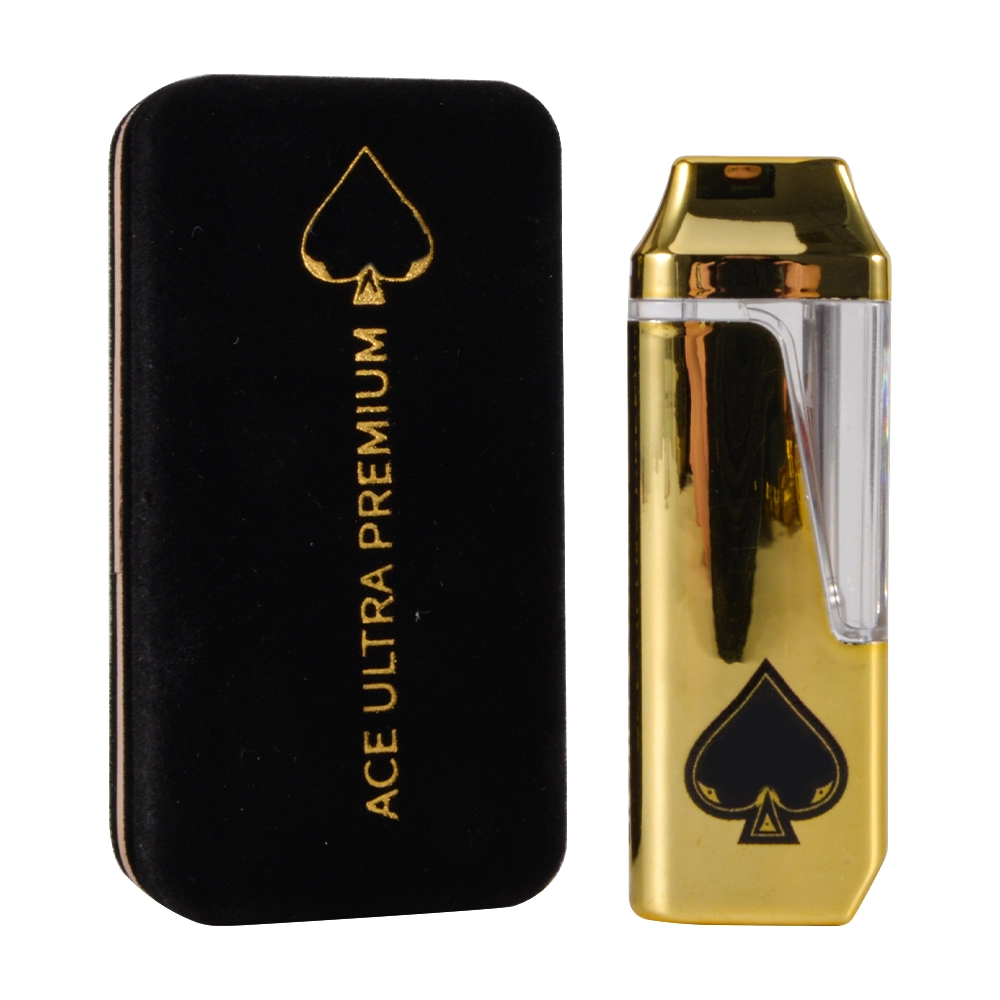
Manufacturing Yield Levers: From EVT/DVT to Mass Production for ACE Vape
A practical, Top-of-Funnel walkthrough of the EVT → DVT → PVT → MP path for ACE vape devices— with concrete yield levers you can ask suppliers to implement when you’re planning ace vape bulk orders.
1) EVT/DVT/PVT in one minute
- EVT (Engineering Validation Test) — first builds that combine “works-like” and “looks-like” with production-intent parts; used to select the production design and expose major issues (often hundreds to ~1,000 units). :contentReference[oaicite:0]{index=0}
- DVT (Design Validation Test) — industrialization of the design: tolerance stacks, tooling prove-outs, and design tweaks while the contract manufacturer tunes processes and fixtures. :contentReference[oaicite:1]{index=1}
- PVT (Production Validation Test) — first true line builds at target cycle time; the focus is yield, repeatability, and line balancing before Mass Production. :contentReference[oaicite:2]{index=2}
2) Yield levers by stage (matrix)
| Stage | Primary Yield Risks | Levers that Work | Proof you want |
|---|---|---|---|
| EVT | Fit/stack issues; wick priming variability; sensor threshold drift | Design of Experiments (DOE) on coil/wick/airway; golden-sample torque & force maps; early AOI/SPI trials | EVT report with defect Pareto; DOE plots; initial IPC visual criteria alignment |
| DVT | Tooling shrink & warpage; weld inconsistency; assembly rework driving damage | Hard-tool tuning; ultrasonic weld energy windows; poka-yoke nests; gauge R&R on critical dimensions | Capability (Cpk) ≥ 1.33 for CTQs; weld “collapse” window; rework work-instructions & limits |
| PVT | Line imbalance; false fails; sampling too loose/tight | Inline AOI + leak/pressure decay test; SPC on top rejects; ISO 2859-1 AQL tables finalized | First-pass yield (FPY) ≥ target; scrap/rework Pareto; signed-off AQL plan |
3) Inline inspections that move yield
IPC-A-610 visual acceptance
Align with IPC-A-610 acceptance criteria (most consumer devices target Class 2) for solder, component alignment, lead fillets and cosmetic conditions. It’s the industry’s primary pictorial standard for electronic assembly acceptability and pairs with J-STD-001 process requirements. :contentReference[oaicite:3]{index=3}
AOI/SPI + end-of-line (EoL) function
Run 3D SPI → AOI → EoL function tests (ignition, sensor trigger, output stability). Keep false-fail rates low by tuning AOI libraries on golden and known-bad samples.
Why this matters for ace vape bulk: AOI + IPC visuals remove assembly drift; EoL function catches latent “no-fire/weak-hit” units before they leave the line.
4) Environmental & reliability screens that catch early fails
- Thermal change (IEC 60068-2-14): cycle builds between hot and cold with controlled transfer time to expose cracks, seal creep, or display bleed before MP. :contentReference[oaicite:4]{index=4}
- Humidity stress for PCBAs (JEDEC): THB at 85 °C/85% RH (long dwell) and HAST at 130 °C/85% RH with bias (~96 h) accelerate moisture-related failures in electronics. :contentReference[oaicite:5]{index=5}
These are quick “screeners” during DVT/PVT—not lifetime qual—so you can close yield-killing mechanisms early.
5) Smart sampling: AQL and what to set
Use ISO 2859-1 (attributes sampling) to define lot acceptance via AQL—typically separate critical (often AQL 0), major, and minor defect categories. This gives you a shared table with the factory and prevents over- or under-sampling at PVT/MP. :contentReference[oaicite:6]{index=6}
| Defect class | Examples | Typical AQL |
|---|---|---|
| Critical | Auto-fire, short, severe leak | 0 |
| Major | No-fire, weak output, cosmetic gouge | 0.65–1.0 |
| Minor | Tiny scuff, minor label skew | 1.5–2.5 |
6) PVT → MP handoff checklist (print this)
- Locked CTQs (coil resistance window, wick porosity, airway ΔP, sensor threshold) with Cpk ≥ 1.33
- Ultrasonic weld window (amplitude/force/time or energy/collapse) & leak test plan
- IPC-A-610 Class target + photo atlas for cosmetic calls (golden/limit samples) :contentReference[oaicite:8]{index=8}
- Environmental screens baked into PVT (thermal change cycles; short THB/HAST panel for PCBAs) :contentReference[oaicite:9]{index=9}
- AQL table signed with sample sizes and acceptance numbers (ISO 2859-1) :contentReference[oaicite:10]{index=10}
- Run-at-rate record (target takt, FPY, top-3 reject modes and fixes)
7) Buyer FAQ
Q1: How many units should we build at EVT?
Hardware teams often produce hundreds up to ~1,000 EVT units to compare design options and surface systemic issues before tooling and line setup. Adjust by risk and budget. :contentReference[oaicite:11]{index=11}
Q2: Which IPC class should I call out?
For consumer-grade electronics, Class 2 acceptance is typical; Class 3 is reserved for high-reliability sectors like aerospace/medical. Decide based on your market and service expectations. :contentReference[oaicite:12]{index=12}
Q3: What fast stress tests de-risk early field returns?
Pair IEC 60068-2-14 thermal change cycles with a short JEDEC THB/HAST panel on the PCBA. Together they reveal seal, material and moisture-sensitivity weaknesses before MP. :contentReference[oaicite:13]{index=13}
People can find vape bulk in following pages: ace packman wholesale | wholesale ace packman disposable | custom 2ml thc vape
0 Comments