
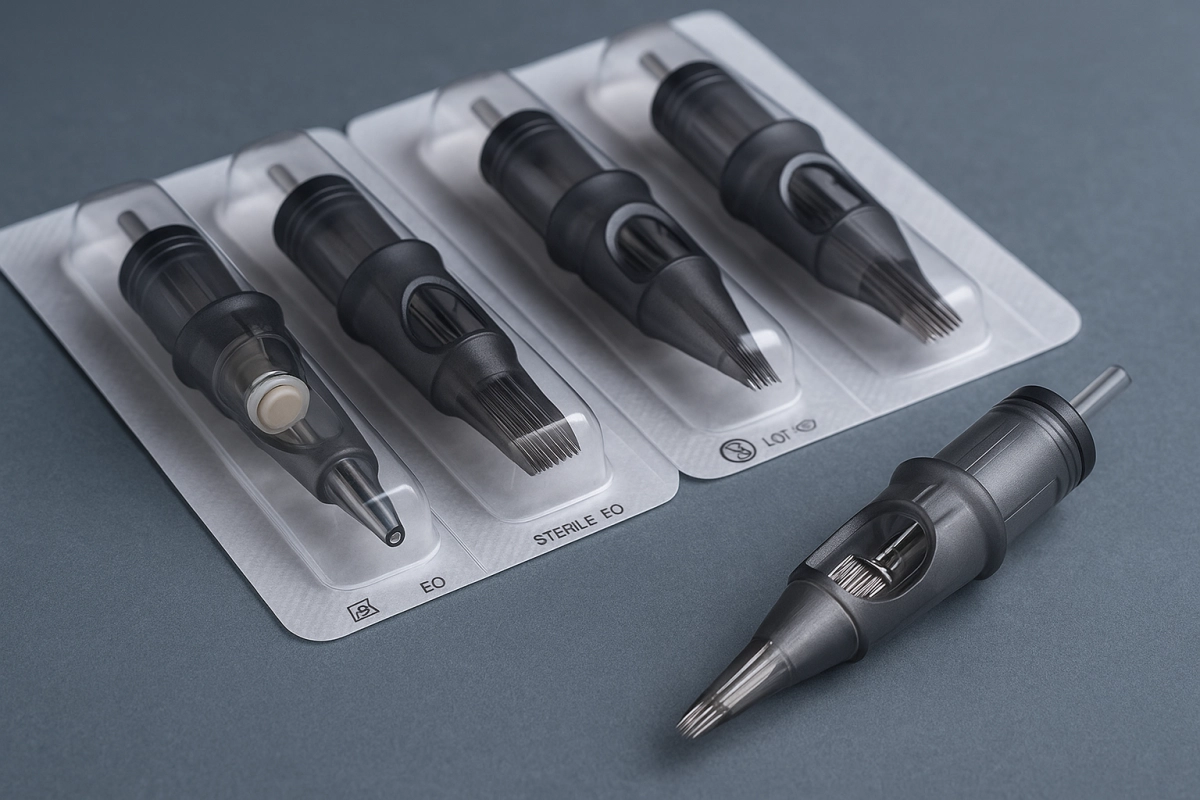
Exploring the Benefits of Ghost Cartridges for Tattoo Artists
Keyword: ghost cartridges · A practical guide to materials, hygiene features, sterilization, and compliance so you can pick cartridges that protect clients, streamline your workflow, and meet 2025 standards. Sources are linked throughout.
What are Ghost Cartridges?
Ghost-branded tattoo needle cartridges are single-use, pre-sterilized modules offered in liner, shader, and magnum variants. Product pages and retail listings highlight Japanese stainless steel (often 316L) for needles, sharp grind for smooth flow, and boxes of 20 units; some lines cite 304 steel as well. :contentReference[oaicite:0]{index=0}
Several distributors describe safety membranes and ergonomic grips in “Ghost Pink” or similar editions, designed to reduce backflow into the grip and improve control during long sessions. :contentReference[oaicite:1]{index=1}
Key benefits for artists (why many choose ghost cartridges)
1) Consistent lines and fills via materials + grind
High-grade 316L/304 needles and “extra-sharp” grinds are marketed to deliver stable ink flow and reduced trauma, which helps with predictable lines, packing, and gradients—especially across large 2–6 hour blocks. Always match voltage/hand speed to grouping and taper. :contentReference[oaicite:2]{index=2}
2) Safety membrane to protect your handpiece
Membrane-sealed cartridges reduce the risk of backflow (ink/blood/plasma) toward your grip/drive stem compared with open-tip designs—an important engineering control in hygienic practice. :contentReference[oaicite:3]{index=3}
3) Time savings & less setup complexity
Quick swaps (liner → mag → curved mag) with disposable cartridges reduce instrument turnover compared with traditional needle-bar/tube setups, freeing more time for placement and aftercare coaching. (Still treat every swap as a clean field change per your SOP.) :contentReference[oaicite:4]{index=4}
Common configurations & when to use them
| Grouping | Typical uses | Notes |
|---|---|---|
| RL (Round Liner) | Outlines, whip/pepper shading | Choose taper/diameter to control ink load and trauma. |
| RS (Round Shader) | Soft fills, stippling, small color areas | More open spacing than RL for smoother blends. |
| M1 / M1C (Magnum / Curved Magnum) | Color packing, large fills, gradients | Curved edge helps avoid corner snagging on curves. |
| RM (Round Magnum) | Soft blends on form transitions | Good for portraits and black-and-grey. |
Ghost listings and resellers indicate a wide range of tapers and 100+ configurations; confirm exact SKUs and tapers in the product listing you buy. :contentReference[oaicite:5]{index=5}
Hygiene & sterilization details worth checking
- EO sterilized & sealed packaging: For ethylene-oxide (EO) sterilized devices, FDA notes that packages must be gas-permeable and properly sealed; reputable suppliers will show sterile symbols, EO indicators, and lot/expiry. :contentReference[oaicite:6]{index=6}
- EO validation to ISO 11135: Manufacturers typically validate EO processes per ISO 11135 with half-cycle overkill approaches documented by sterilization providers. :contentReference[oaicite:7]{index=7}
- Single-use only: Dispose of used cartridges as sharps; do not re-sterilize. EN 17169 guides safe practice and single-use instrumentation. :contentReference[oaicite:8]{index=8}
Standards & legal compliance that apply in 2025
Workplace safety (U.S.)
Tattooing involves reasonably anticipated exposure to blood/OPIM, so studios fall under OSHA’s Bloodborne Pathogens Standard, 29 CFR 1910.1030—including written Exposure Control Plans, HBV vaccinations offered to staff, training, and post-exposure evaluation. OSHA letters explicitly include tattoo establishments. :contentReference[oaicite:9]{index=9}
Hygienic practice (EU/UK reference)
EN 17169:2020 Tattooing—Safe and hygienic practice sets requirements before, during, and after tattooing, including use of sterile, single-use equipment and procedures to protect clients and staff. :contentReference[oaicite:10]{index=10}
Purchase & studio checklist (copy-paste)
- On box: Grouping/taper, lot/expiry, “EO sterilized” mark, sterile symbol, integrity of blister seal. :contentReference[oaicite:11]{index=11}
- On listing: Needle material (316L or 304), safety membrane, ergonomic grip, configuration count; buy sealed boxes of 20 from authorized sellers. :contentReference[oaicite:12]{index=12}
- In SOP: Follow EN 17169 (where applicable) for single-use instruments; in the U.S., maintain OSHA 1910.1030 training, HBV vaccination offers, and sharps disposal protocols. :contentReference[oaicite:13]{index=13}
Quick FAQ
Are ghost cartridges compatible with all grips?
Check the product listing for your machine/grip type; many modern cartridges are designed for popular universal-style grips, but verify fit before bulk buys. :contentReference[oaicite:14]{index=14}
Why 316L vs 304 steel?
Both are corrosion-resistant stainless steels used in needles; listings emphasize Japanese 316L for hardness and edge retention, with some lines noting 304. Your priority is a clean grind and consistent flow from a reputable supplier. :contentReference[oaicite:15]{index=15}
::contentReference[oaicite:17]{index=17}
People can find custom vape in following pages: all glass cartridge | wholesale 1000mg cartridge | empty vape cartridge
0 Comments