
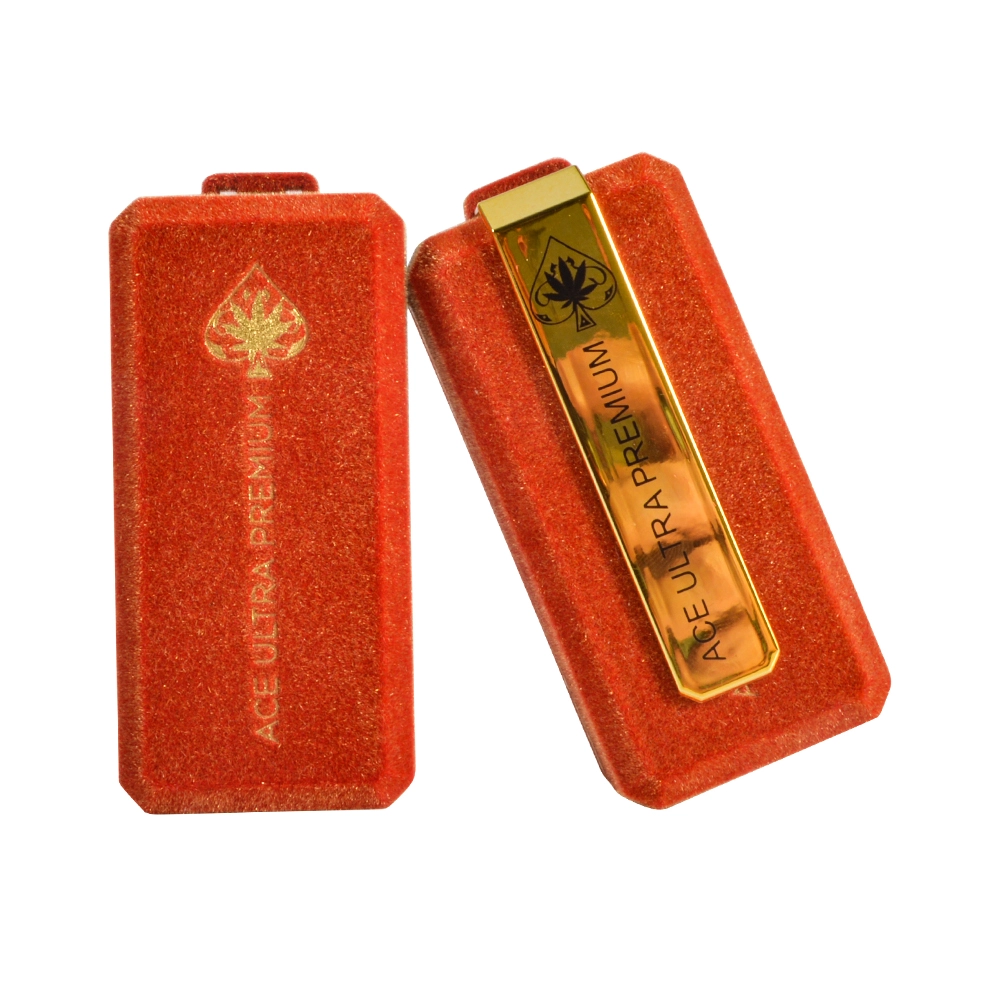
ACE vape 1 g vs 2 g vs 3 g: What wholesalers actually compare at the TOFU stage
At top-of-funnel, buyers aren’t debating minor specs—they’re scanning capacity, reliability risks, shelf economics, and whether the mix mirrors what’s winning in U.S. retail right now.
Market snapshot (why capacity matters in 2025)
Disposables dominate tracked retail: In U.S. brick-and-mortar scanner data (multi-outlet + convenience), disposables rose from 26.0% of unit sales (Feb 2020) to 58.1% (Jun 16, 2024), with unit volume up +201.3%. Variety followed suit—by mid-2024, 92.8% of distinct products on shelves were disposables. :contentReference[oaicite:0]{index=0}
Nicotinic load concentrated in disposables: By June 2024, disposables accounted for about 74% of all nicotine sold in tracked channels, despite being ~58% of units. The gap comes from bigger devices with much more e-liquid per unit. :contentReference[oaicite:1]{index=1}
Method notes: scanner data come from Circana/IRI and exclude vape shops and online sales; standardized units = one disposable device, five prefilled cartridges, or one bottle of e-liquid. :contentReference[oaicite:2]{index=2}
What wholesalers actually compare at TOFU (1 g vs 2 g vs 3 g)
1) Cost-per-mL & ticket size
Because larger reservoirs reduce swaps and often raise basket size, buyers look at effective cost-per-mL, not just shell price. Disposables’ surge coincides with increased e-liquid per device and falling price per mg nicotine vs. cartridges—one reason 2–3 g formats gained ground. :contentReference[oaicite:3]{index=3}
2) Return drivers (leakage, “light-on/no-vapor”)
Capacity changes thermal mass and internal pressure. 2–3 g shells are less forgiving of sloppy seals/torque, so wholesalers evaluate vendor QC (inlet geometry, gasket compression, drop/thermal cycling). Stable QC can make 2 g and 3 g returns comparable to 1 g in practice; poor QC amplifies failure rates at higher capacities.
3) Shelf throughput & SKU sprawl
With thousands of UPCs already in market, buyers prefer a narrow, fast-turning capacity ladder (e.g., 1 g entry + 2 g core + 3 g premium) over many near-duplicates. Mid-2024 shelves listed 6,287 e-cigarette products; over-fragmentation slows turns and complicates QA. :contentReference[oaicite:4]{index=4}
4) Feature set expectations (screen vs minimalist)
“Smart” disposables (battery/juice indicators, counters) appear among top brands in 2025 briefs, so buyers often map one minimalist and one “screen” option at the same capacity. :contentReference[oaicite:5]{index=5}
Capacity ladder at a glance (ACE vape empty shells)
| Capacity | Where it fits | Pros wholesalers cite | Risks to manage |
|---|---|---|---|
| 1 g | Entry price points; trial programs; strict shelf-space limits | Lower unit cost; simpler thermal/pressure profile; good for sampling | More swaps per end user; weaker ticket size; losing ground vs 2 g in many channels (tracked retail mix shift) :contentReference[oaicite:6]{index=6} |
| 2 g | Core planogram slot; “standard” disposable experience in 2024–2025 | Best balance of price, capacity, and returns; aligns with dominant disposable segment | Must control seal torque & condensation; add optional “screen” variant to match retail leaders :contentReference[oaicite:7]{index=7} |
| 3 g | Premium tiers; fewer swaps and larger baskets; heavy users | Higher revenue per unit; fewer device changes for end users | Stricter QC to prevent leaks; moderate price sensitivity; stock selectively, prove turns first |
A pragmatic ACE vape mix you can defend
Core lineup
- 2 g minimalist (price/volume workhorse)
- 2 g with screen (battery & e-liquid indicators)
- 3 g premium (select accounts/regions)
- Optional 1 g (entry programs & tight shelves)
Why it maps to the data
Disposables hold the majority of unit share and concentrate nicotine sold because devices are larger and last longer. A 2 g-anchored range mirrors the post-2020 retail shift; a selective 3 g captures premium demand without bloating SKUs. :contentReference[oaicite:8]{index=8}
TOFU FAQ
Is 2 g really the “new normal”?
In tracked retail, disposables dominate units and product variety; larger reservoirs and “smart” features are common among top brands—hence a 2 g core with a screen option is a safe starting point. :contentReference[oaicite:9]{index=9}
Why not go all-in on 3 g?
3 g wins on ticket size and fewer swaps, but it magnifies QC stakes (seal integrity, thermal cycling). Stock it, prove turns, then scale.
Where do cartridges fit?
Cartridge share fell as disposables more than doubled 2020→2022 and the pattern persisted into 2024; keep cartridge-compatible offerings limited unless a specific channel demands them. :contentReference[oaicite:10]{index=10}
Notes & sources
Data points on unit share growth, SKU counts and flavor mix come from CDC Foundation e-cigarette sales briefs (Circana/IRI scanner data, through Jun 16, 2024). :contentReference[oaicite:11]{index=11} Trends by product type (disposables vs cartridges) rely on CDC MMWR analysis for 2020–2022. :contentReference[oaicite:12]{index=12} Nicotine-content concentration and the rise in e-liquid per disposable come from peer-reviewed work (Ali et al., 2025) and corroborated public summaries. :contentReference[oaicite:13]{index=13} 2025 brand mix and “smart vape” emergence reference national sales briefs. :contentReference[oaicite:14]{index=14}
Need this tailored to your catalog? I can convert this into a landing page with internal links, spec tables, and “documents on request” blocks for ACE vape empty hardware.
People can find custom vape in following pages: empty ace ultra | ace ultra premium disposable | custom 2ml thc vape
0 Comments