
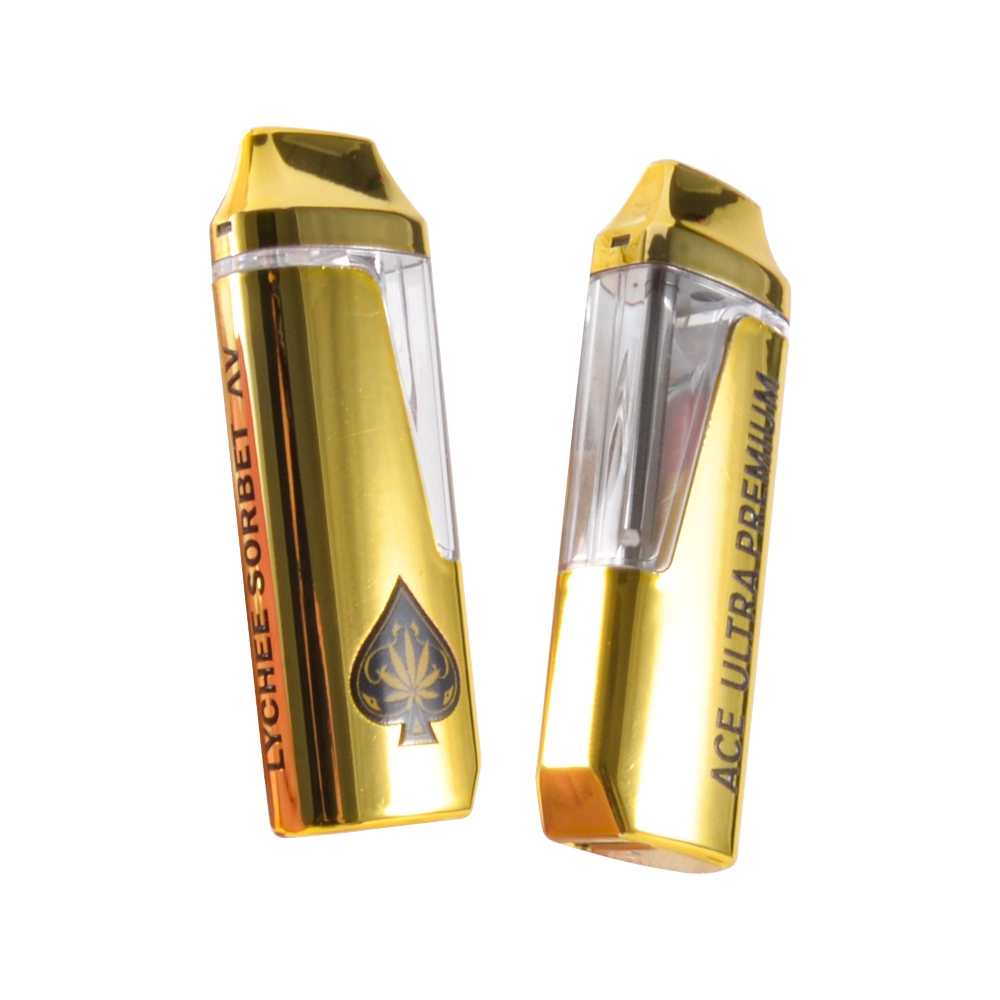
ACE Vape Anti-Leak Stack: Seals, Welds, and Negative-Pressure Tests
This ToFu playbook explains how ACE vape (pillar keyword) and ace vapes manage leaks from the inside out—choosing the right seal materials, dialing ultrasonic welds, and validating with negative-pressure tests you can ask any factory to run.
1) What is the “anti-leak stack” for ACE vape?
Think of it as three layers working together:
- Seals & gaskets: geometry + elastomer hardness keep oil where it belongs.
- Welded joints: stable, repeatable energy at joints prevents micro-paths.
- Validation tests: vacuum/pressure methods expose gross and fine leaks fast.
Why standardized tests? Because methods like vacuum bubble, internal pressurization, and pressure/vacuum decay are formalized in ASTM and IEC protocols—so you can compare data across suppliers instead of trusting anecdotes. :contentReference[oaicite:0]{index=0}
2) Seal materials & hardness (quick wins)
Pick the right durometer
Elastomer hardness is measured by ASTM D2240 (Shore A/OO scales). Using one spec across all vendors prevents “too soft to seal / too hard to conform” surprises. :contentReference[oaicite:1]{index=1}
- Too soft → creep under load, long-term set, leaks after temperature swings.
- Too hard → poor conformability to mating surfaces and weld beads.
Ingress cues
If you publish any splash/dust claims on ace vapes, align enclosure design and test samples to the IEC 60529 IP code (e.g., IP54/IPX4 lab methods) so “leak-tight” isn’t just marketing language. :contentReference[oaicite:2]{index=2}
3) Ultrasonic welds that stay tight
For most ACE vape shells, ultrasonic welding is the workhorse. Weld quality tracks with the ABCs: Amplitude, force/pressure, and time/energy. Vendor guides and textbooks consistently describe these as the primary controls; amplitude has outsized impact on energy transfer at the joint. :contentReference[oaicite:3]{index=3}
- Design for weld: add energy directors/ribs so energy focuses at the seam (common best practice in ultrasonic welding design). :contentReference[oaicite:4]{index=4}
- Control the collapse: target a small, repeatable weld “collapse” window to prove fusion without flash or distortion. :contentReference[oaicite:5]{index=5}
Why it matters for leaks: under-welded seams leave micro-channels; over-welded seams can create stress whitening or warp that lifts seals later.
4) Negative-pressure & seal-integrity tests that matter
Vacuum bubble (negative-pressure)
ASTM D3078: immerse the item and pull vacuum; bubbles reveal gross leaks. It’s quick and widely used for flexible packages and assemblies. :contentReference[oaicite:6]{index=6}
ASTM F2338: vacuum decay—non-destructive, detects leaks by measuring pressure rise in an evacuated chamber; sensitive to small defects and liquid-blocked leaks when chamber vacuum is set below liquid vapor pressure. :contentReference[oaicite:7]{index=7}
Internal pressurization & pressure decay
ASTM F2096: inflate the package and watch for bubble emission; sensitivity typically to ~250 µm channels (probabilistic). :contentReference[oaicite:8]{index=8}
ASTM F2095: pressure-decay—quantifies leak rates ≳1×10⁻⁴ sccs; with/without restraining plates depending on stiffness. :contentReference[oaicite:9]{index=9}
Dye & seal-strength companions
- ASTM F1929 dye penetration—finds channel leaks at seals (down to ~50 µm when configured). :contentReference[oaicite:10]{index=10}
- ASTM F88/F88M—measures peel/seal strength so you can correlate opening force to leak risk. :contentReference[oaicite:11]{index=11}
For hermeticity-style enclosure checks on small electronics, IEC 60068-2-17 provides seal tests for gross/fine leaks; use it to formalize sample sizes, set points and reporting. :contentReference[oaicite:12]{index=12}
5) A simple anti-leak validation matrix (send to suppliers)
Ask factories to run these on golden samples of your ace vapes; keep power/airflow constant when measuring aerosol output before/after tests.
| Test & Reference | Typical Setup | Pass/Fail Examples | Why it helps |
|---|---|---|---|
| Vacuum bubble (ASTM D3078) | Immersion; pull vacuum to spec; 30–60 s observation | No continuous bubble streams; no window fogging/cracks | Fast screen for gross leaks under negative pressure. :contentReference[oaicite:13]{index=13} |
| Vacuum decay (ASTM F2338) | Evacuated chamber; precision transducer | Pressure rise below threshold; repeatability within method limits | Nondestructive, detects fine leaks & liquid-blocked paths. :contentReference[oaicite:14]{index=14} |
| Internal pressurization (ASTM F2096) | Inflate to % of burst; bubble emission check | No bubble emission at target pressure/dwell | Probabilistic gross-leak screen; quick and visual. :contentReference[oaicite:15]{index=15} |
| Pressure-decay (ASTM F2095) | Pressurize; monitor decay; with/without restraining plates | Leak rate < 1×10⁻⁴ sccs (or tighter, per design) | Deterministic quantification of small leaks. :contentReference[oaicite:16]{index=16} |
| Seal-strength (ASTM F88/F88M) | Peel test strips; record force & failure mode | Strength within control limits; adhesive/cohesive failure mapped | Links mechanical margin to future leak risk. :contentReference[oaicite:17]{index=17} |
| Seal dye check (ASTM F1929) | Dye apply/soak; visual inspection | No dye ingress at seals/channels | Localizes channel leaks at weld/adhesive seams. :contentReference[oaicite:18]{index=18} |
| Seal test (electronics) (IEC 60068-2-17) | Gross/fine leak setpoints as per spec | No leak indication; enclosure integrity maintained | Electronics-focused sealing verification. :contentReference[oaicite:19]{index=19} |
If you market splash/dust resistance, align the enclosure and samples to IEC 60529 IP methods (e.g., IPX4 spray) so the claims survive replication. :contentReference[oaicite:20]{index=20}
6) Buyer FAQ
Q1: What’s the fastest screen for a new ACE vape build?
Run a vacuum bubble screen (ASTM D3078) for gross leaks, then a vacuum or pressure decay check (ASTM F2338/F2095) to quantify small leaks nondestructively. :contentReference[oaicite:21]{index=21}
Q2: Do I really need seal-strength data if leak tests pass?
Yes—peel/tear data (ASTM F88/F88M) explains why a seal is robust, and helps you spot drift before leaks appear in the field. :contentReference[oaicite:22]{index=22}
Q3: How do I spec gasket hardness so every vendor matches?
Call out Shore hardness by ASTM D2240 (e.g., Shore A 50 ± 5) and keep the same test method across vendors to avoid variation. :contentReference[oaicite:23]{index=23}
Q4: Our shells are ultrasonically welded—what should I ask for?
Request weld setup windows for amplitude/force/time (or energy/collapse) and a short justification per the vendor’s ultrasonic welding guide; these are the primary levers tied to hermeticity. :contentReference[oaicite:24]{index=24}
People can find vape bulk in following pages: ace packman wholesale | wholesale ace packman disposable | custom 2ml thc vape
0 Comments