
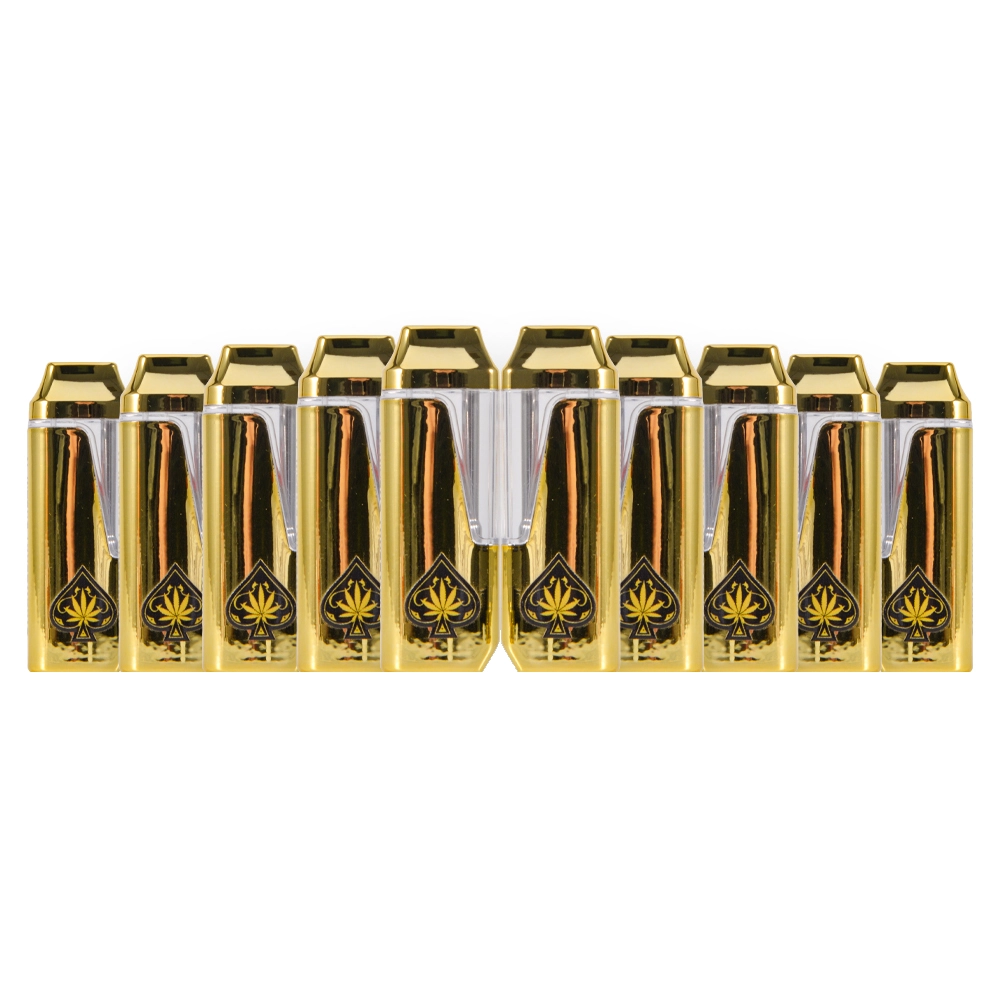
ACE Vape Aerosol 101: Designing for First-Puff and All-Day Consistency
This MoFu guide shows how ACE vape (pillar keyword) and ace disposable devices are engineered and bench-tested so buyers can predict first-puff satisfaction and all-day stability—without diving into regulations.
1) What “consistency” really means for ACE vape
Core metrics
- Aerosol Mass per Puff (AMP) at a defined draw.
- Droplet size distribution (mass-weighted)—most e-cig aerosols center roughly in the sub-micron range when undiluted (≈250–450 nm). Source: Ingebrethsen et al., aerosol mass-mode ~250–450 nm, undiluted measurements. :contentReference[oaicite:0]{index=0}
- Puff-to-puff drift (stability across a full session/day).
Why these matter
- Buyers can compare SKUs using the same draw profile.
- Smaller, tighter droplet distributions tend to yield more repeatable taste at given power/airflow settings; power changes shift both count and mass distributions. Power strongly affects size & mass distributions. :contentReference[oaicite:1]{index=1}
2) Reference puffing regimes you can trust
For apples-to-apples testing, use the lab regimes widely adopted for vapour products: 55 mL puff volume, 3 s puff duration, 30 s inter-puff, square profile. That standardization lets you compare AMP and size across ACE vape variants (or an ace disposable with different wattage curves) without confounding topography. ISO 20768 and CORESTA CRM81/Guidance recommend 55/3/30 with a square puff; these are common baselines in peer-reviewed methods. :contentReference[oaicite:2]{index=2}
Evidence snapshot: Changing topography alone shifts output—e.g., measured mass per puff rose from ~4.6 mg at 55 mL to ~6.2 mg at 75 mL under fixed conditions. Keep the regime fixed for supplier A/Bs. :contentReference[oaicite:3]{index=3}
3) First-puff optimization (impact without harshness)
Goals
- Instant ignition, no dry-hit risk.
- Target AMP at puff #1 within ±10% of the session median.
Engineering levers
- Pre-wetting strategy for the wick (short soak + controlled storage) so capillaries are primed.
- Soft-start PWM (e.g., 100–300 ms ramp) to bring the coil to temperature while avoiding over-shoot that skews droplet size distribution. Power/heat setting materially changes aerosol count and mass distributions. :contentReference[oaicite:4]{index=4}
- Airflow-coupled power so flow spikes don’t overheat the film on the wick.
4) All-day stability & power curves
As the session progresses, the same ace disposable must hold taste and output while oil level, wick saturation, and device temperature evolve. Practical approach:
- Map a “power vs AMP” curve at 55/3/30, then choose a plateau region where AMP is stable and droplet size doesn’t skew too fine/coarse. :contentReference[oaicite:5]{index=5}
- Introduce thermal budget limits (duty-cycle or short cool-off windows) to prevent cumulative over-heating between puffs. Standardized intervals (30 s) are used precisely to manage thermal carryover in machine vaping. :contentReference[oaicite:6]{index=6}
- Validate across topographies (e.g., brief 5-s stress tests at higher flow) to ensure the control loop doesn’t collapse. Alternate puffing profiles/flows are common in aerosol method studies for robustness testing. :contentReference[oaicite:7]{index=7}
5) Wick × viscosity matching (temperature matters!)
Wicking in ACE vape is governed by capillary physics: imbibition speed scales with pore radius, surface tension, contact angle and is inversely related to viscosity. The classical Lucas–Washburn relation is the standard model used to reason about these trade-offs in porous ceramics and fibrous wicks. :contentReference[oaicite:8]{index=8}
Propylene glycol (PG) and glycerol (GL) mixtures thin out as temperature rises, expanding the “safe” wicking window. Peer-reviewed correlations and datasets exist for PG/GL/H2O systems across broad temperatures—use them when selecting pore sizes and coil power. Examples: Khattab et al. (PG–water), Chen et al. (glycerol–water correlation), Spann et al. (PG/GL/H2O model). :contentReference[oaicite:9]{index=9}
| Design cue | Why it helps |
|---|---|
| Moderate pore sizes with narrow distribution | Balances capillary lift with bubble escape; reduces first-puff variability. :contentReference[oaicite:10]{index=10} |
| Cold-start power boost with quick taper | Offsets high viscosity at low temp without overshooting droplet size. :contentReference[oaicite:11]{index=11} |
| Oil-temperature pre-conditioning window | Stabilizes AMP across the first few puffs in cold stores. :contentReference[oaicite:12]{index=12} |
6) Airflow & trigger for repeatable activation
Keep the draw profile stable by matching airway geometry and pressure-sensor thresholds to the reference regime. Using 55/3/30 as the baseline, target an MTL-like resistance that the sensor reliably detects without flutter at low flows. Standardized regimes (55 mL, 3 s, 30 s, square profile) are the common reference for machine vaping and method papers. :contentReference[oaicite:13]{index=13}
7) Supplier checklist & bench tests (MoFu)
Ask prospective ACE vape suppliers for the following, so your team can predict scale-up performance:
| Deliverable | What “good” looks like | Why it matters |
|---|---|---|
| Machine-vaping report at 55/3/30 (≥50 puffs) | AMP mean ± SD; size distribution (mass-mode or MMAD); first-puff within ±10% of median | Standardized comparison across SKUs and batches. :contentReference[oaicite:14]{index=14} |
| Power curve sweep | Plateau region identified; no runaway heating or harshness signatures | Power strongly reshapes mass & size distributions—choose a stable zone. :contentReference[oaicite:15]{index=15} |
| Cold-start panel (e.g., 0–5 °C oil temp) | Consistent ignition; no dry-hit; AMP drift controlled in first 3 puffs | Viscosity rises at low temp; tune wick + power accordingly. :contentReference[oaicite:16]{index=16} |
| Alternate topography stress | Documented behavior at higher volume/flow (e.g., 75 mL or longer puffs) | Output scales with topography; confirm controls remain stable. :contentReference[oaicite:17]{index=17} |
Tip: When two ace disposable builds look similar on specs, the one with the flatter AMP vs. puff-index curve under 55/3/30 will usually yield fewer “weak-hit” complaints over a day.
8) Mini FAQ for B2B buyers
Q: Is there a single “best” wattage for ACE vape?
No—map the device’s power curve and pick the plateau zone where AMP and droplet size remain stable across the first 50 puffs. Power changes are a primary driver of both counts and mass distribution. :contentReference[oaicite:18]{index=18}
Q: What droplet sizes should we expect?
Undiluted aerosols commonly show mass-modes in the ~250–450 nm range in lab measurements; your exact distribution will vary with power, airflow, and formulation. :contentReference[oaicite:19]{index=19}
Q: Do we really need to fix the puffing regime when comparing SKUs?
Yes. Even modest topography shifts (e.g., 55→75 mL) can materially change mass per puff, so fix 55/3/30 for comparability. :contentReference[oaicite:20]{index=20}
People can find custom vape in following pages: empty ace ultra | ace ultra premium disposable | custom 2ml thc vape
0 Comments