
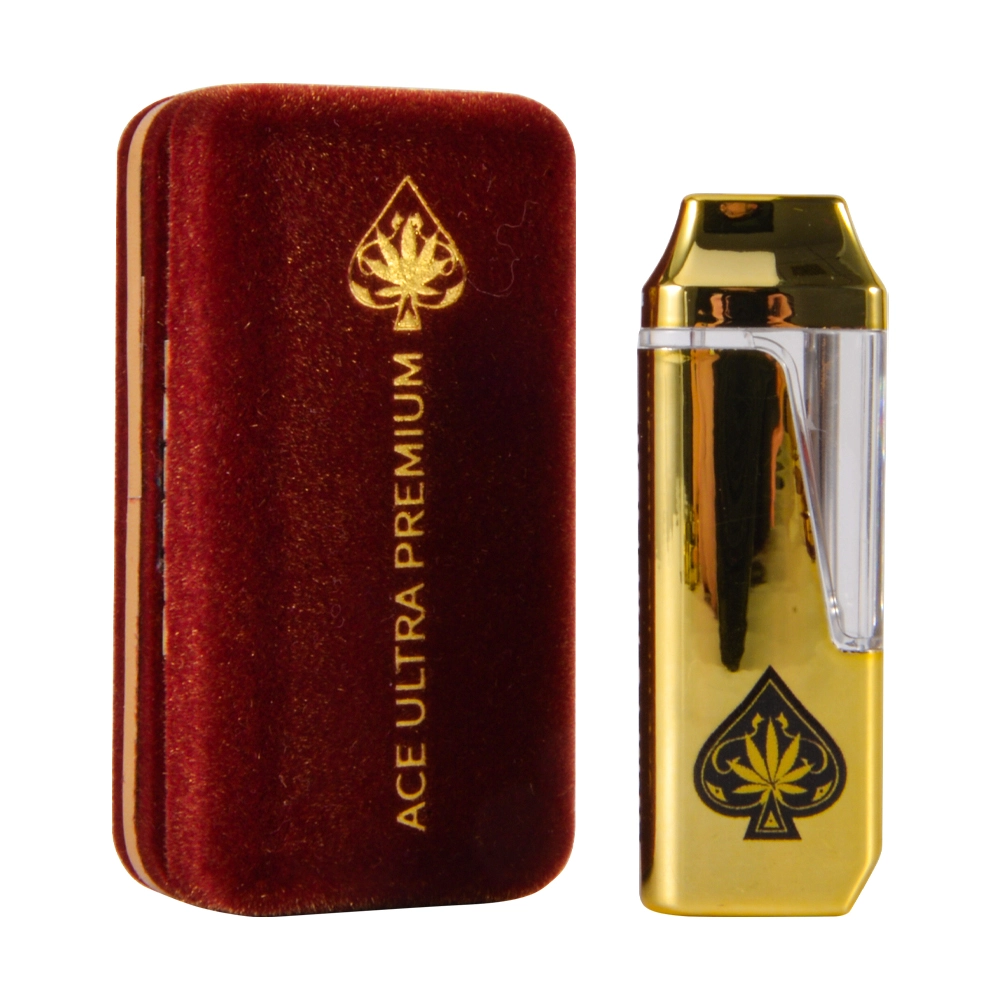
ACE Vape Aerosol 101: Designing Consistent Flavor and Output
This ToFu primer explains how ACE vape devices (and your favorite ace vape pen) achieve steady flavor and output—by standardizing draw profiles, mapping power to aerosol, sizing droplets correctly, and matching wicks to temperature-dependent viscosity.
1) What “consistency” means in aerosol design
- Aerosol mass per puff (AMP) stays near target across the session.
- Droplet size distribution stays within a stable band so flavor doesn’t wobble as the coil heats and the wick replenishes.
- First-puff ≈ mid-session experience: ignition is instant, no dryness spike, no harsh overshoot.
2) Use a trusted puffing regime (and when to adapt it)
For apples-to-apples testing, labs commonly use a 55 mL / 3 s / 30 s interval, square puff profile specified in ISO 20768 and CORESTA CRM 81. These methods define how vaping machines should operate so AMP and droplet data can be compared across products and batches. :contentReference[oaicite:0]{index=0}
Newer guidance notes that very high-airflow devices can overheat under a strict 55 mL/3 s square puff and may require adjusted flows or regimes to avoid bias in AMP and droplet results—flag this when you test high-flow builds. :contentReference[oaicite:1]{index=1}
Recent method papers and reviews still use the 55/3/30 baseline when reporting validation data, so it remains a solid starting point for ace vape pen comparisons. :contentReference[oaicite:2]{index=2}
3) Power → aerosol mapping: where flavor is most stable
Map a simple curve: step coil power and measure AMP and droplet size at the same draw regime. Studies show vaping power substantially shifts both count and mass distributions—too low gives thin output; too high skews droplets and can dull flavor. The “sweet plateau” is where AMP is flat and the mass-mode doesn’t drift. :contentReference[oaicite:3]{index=3}
| Observation | Likely cause | Action |
|---|---|---|
| AMP rises but taste gets harsh | Over-ramp → film overheats; droplet band shifts | Use soft-start or lower peak wattage; lengthen cool-down |
| AMP flat but flavor fades late session | Wick not replenishing fast enough | Increase pore radius/porosity or reduce duty cycle |
| Big puff-to-puff swing | Sensor flutter / airflow instability | Raise trigger stability; smooth airway pressure losses |
4) Droplet size 101 (why 250–450 nm keeps taste steady)
Classic undiluted measurements of e-cig aerosols report mass-mode diameters roughly in the 250–450 nm range. That band tracks well with repeatable taste at moderate power for many device classes; pushing power higher broadens and shifts the distribution, which can change perceived flavor and throat feel. :contentReference[oaicite:4]{index=4}
Practical tip: confirm droplet size at your chosen power with an electrical mobility analyzer (or equivalent validated method) and keep the draw regime constant during runs—recent open-access work and reviews use exactly that approach. :contentReference[oaicite:5]{index=5}
5) Wick × viscosity: tuning for cold and warm conditions
Capillary flow through ceramic or fiber wicks follows Lucas–Washburn-type behavior, so pore radius, surface tension, contact angle and liquid viscosity set the replenishment window. Because PG and glycerol thin as temperature rises, the same wick can starve at 0 °C but feed perfectly at 25 °C—use published viscosity–temperature correlations to size pores and power ramps. :contentReference[oaicite:6]{index=6}
Briefly boost power at the first 1–2 puffs, then taper—this offsets cold viscosity without over-heating the film; power affects droplet bands, so validate at your regime. :contentReference[oaicite:7]{index=7}
In warm stockrooms, lower initial duty-cycle to avoid overly fine droplets and taste drift as the oil thins.
6) Airflow & trigger: repeatable activation and draw feel
Keep airway geometry and sensor thresholds aligned to the chosen regime. ISO 20768/CRM 81 define 55/3/30 square puffs for comparability; many recent studies still report data on that baseline, making it a good reference when you A/B ACE vape builds or a new ace vape pen. For very high-airflow designs, follow CORESTA guidance and adapt flow so you don’t bias results. :contentReference[oaicite:8]{index=8}
7) Quick buyer checklist for supplier demos
| Ask for… | Why | What “good” looks like |
|---|---|---|
| Machine-vaping report at 55/3/30 | Standardized comparison across SKUs | AMP mean ±SD; first-puff within ±10% of mid-session; stable draw trace. :contentReference[oaicite:9]{index=9} |
| Power sweep (AMP + droplet size) | Find the plateau where flavor/output are steady | Flat AMP region; mass-mode stable; no harsh overshoot. :contentReference[oaicite:10]{index=10} |
| Cold-start and warm-shelf panels | Viscosity shifts with temperature | No ignition failures; AMP recovers within 2–3 puffs from 0–5 °C; no taste drift at 35–40 °C. :contentReference[oaicite:11]{index=11} |
| High-flow adaptation note (if applicable) | Avoid method bias on high-airflow builds | Documented flow changes per CORESTA Guide for high-airflow devices. :contentReference[oaicite:12]{index=12} |
8) Mini FAQ
Q1: Is there a universal “best wattage” for ACE vape?
No—map power vs. AMP and droplet size. Studies show power reshapes both number and mass distributions; pick the plateau zone that keeps flavor steady. :contentReference[oaicite:13]{index=13}
Q2: What droplet size should I aim for?
Undiluted e-cig aerosols frequently show mass-mode diameters around 250–450 nm at moderate power; verify on your device with the same draw regime. :contentReference[oaicite:14]{index=14}
Q3: Do I always use 55/3/30?
Use it as a baseline for comparability (ISO/CRM81). For very high-airflow devices, adapt flow per CORESTA’s guidance to avoid overheating artifacts. :contentReference[oaicite:15]{index=15}
People can find vape bulk in following pages: ace packman wholesale | wholesale ace packman disposable | custom 2ml thc vape
0 Comments