
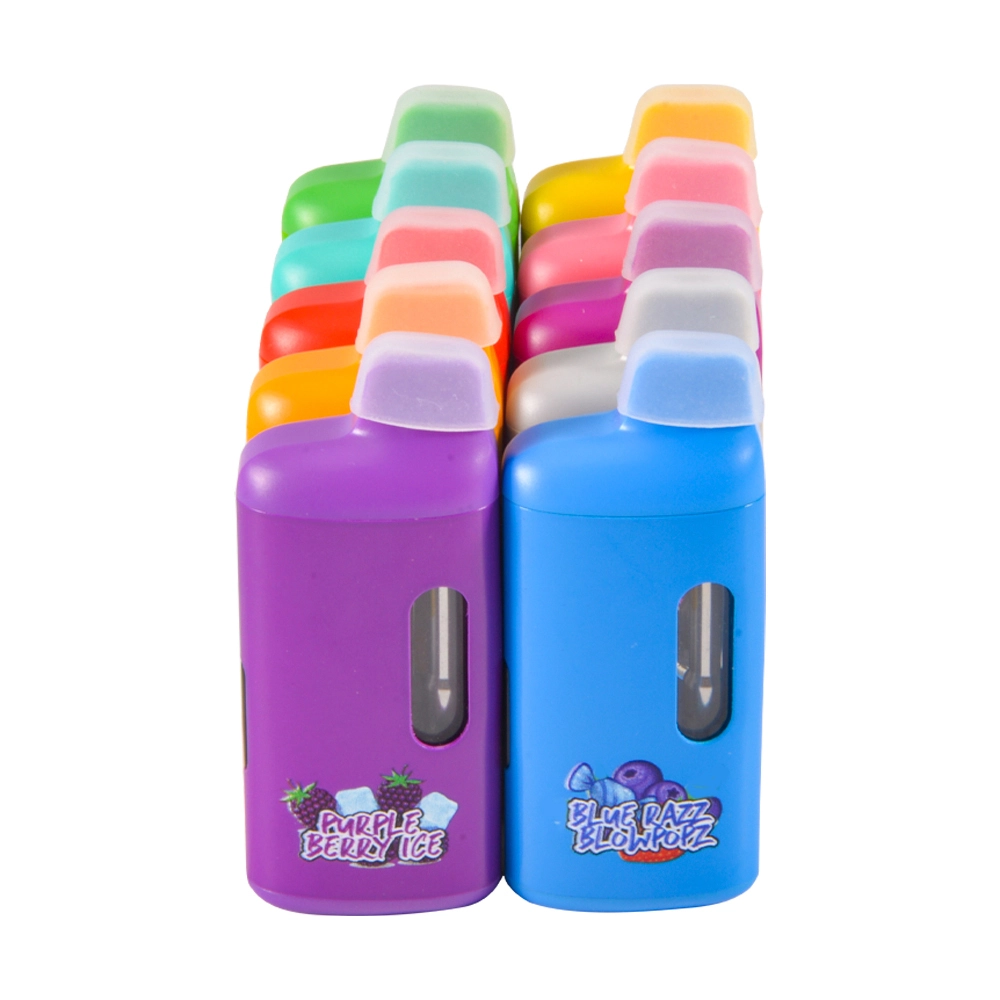
ACE Packman Vape Mouthpiece & Window Design: Look, Durability, and Leak Risk
An engineering-first brief for B2B buyers comparing mouthpiece geometry, window materials, and sealing stacks in ace packman vape and related ace packman disposable vape configurations.
Executive Takeaways
Look & Feel
- Flat mouthpieces look sleeker, run cooler at the lips, and help keep draw resistance consistent at higher flow.
- Round mouthpieces feel more “traditional” and are forgiving at very high airflow; a small internal taper (5–10°) reduces spitback.
- Larger windows improve perceived oil remaining, but need a drain shoulder and capillary return path to avoid “false leak” visuals from condensation.
Durability
- PC (polycarbonate) gives the best drop toughness for windows and mouthpieces.
- PCTG / Tritan™ balances glass-like clarity with resistance to stress-cracking—good for integrated clear tops.
- Borosilicate glass is the most chemically inert and “premium-looking”, but needs mechanical protection against fracture.
Mouthpiece Geometry: Flat vs Round & Bore Design
For ace packman vape, the mouthpiece sets the pressure-drop curve, lip comfort, and condensation behaviour. Flat designs make it easier to build a hidden condensation step near the lip edge; round tips benefit from an internal taper at the exit to lower local air velocity and spitback. As a starting point, keep the terminal bore in the 1.4–1.8 mm range with a 5–10° chamfer or taper. To compare apples-to-apples across suppliers, run a machine-puff test at 55 mL / 3 s / 30 s intervals and track mass loss, aerosol uniformity, and visible condensate at the tip.
Window Materials: Clarity, Toughness, and Chemical Inertness
Common choices for ace packman disposable vape
| Material | Look & Clarity | Durability (Impact / Stress) | Chemical Interaction | Typical Use |
|---|---|---|---|---|
| PC (Polycarbonate) | High clarity; tintable | Very high impact; resists drops far better than acrylic or glass | Watch for environmental stress-cracking from aggressive cleaners | High-throughput retail routes with frequent handling |
| PCTG / Tritan™ Copolyester | Water-clear, non-yellowing | High toughness; excellent resistance to stress-cracking | Stable against many oils/solvents; low molded-in stress | One-piece clear tops (window + mouthpiece) |
| Borosilicate Glass | Optically crisp “premium” look | Chemically and thermally robust; intrinsically brittle to impact | Near-inert to most organics; minimal interaction with terpenes | Flagship SKUs with protective frames or soft mounts |
Sealing Stack: O-Ring Compounds & Tolerances
A typical stack is top cap seat → window part → upper O-ring → drain shoulder → lower O-ring. The elastomer compound matters as much as the geometry:
Recommended
- FKM (Viton®): excellent resistance to oils/fuels and higher temperatures; good for terpene-rich environments.
- FVMQ (Fluorosilicone): keeps elasticity in low temps and handles many fuels/oils better than standard silicone; a good pick for cold regions.
Use with caution
- VMQ (Silicone): great low-temperature flexibility, but generally poor resistance to fuels/gear oils and lower tear strength—limit to benign chemistries.
Target O-ring squeeze (compression) at 12–20%. Keep the assembled axial tolerance stack within ±0.08 mm so that cold shrinkage does not open a micro-leak path.
Condensation Management: Where “Look” Meets Leak Risk
Condensation creates most “looks-like-a-leak” complaints. Around the window and mouthpiece, add a drain shoulder + return slope and a hidden condensate well on the tip side. One or two fine capillary return grooves guide condensate back into the atomization zone instead of leaving a film on the window edge.
- Flat tips: a small internal step (0.2–0.3 mm) near the lip edge helps trap and redirect condensate.
- Round tips: an internal 5–10° taper at the exit reduces local air-velocity peaks and spitback.
- Large windows: use a stiff frame + soft gasket to prevent out-of-plane movement on drops.
Quick Comparison: Which Window for Your Channel?
| Scenario | Best Pick | Why | Watchouts |
|---|---|---|---|
| High-throughput / frequent handling | PC or PCTG | Superior impact resistance; easy tint; anti-scuff coating possible | Avoid harsh cleaners that drive stress-cracking |
| Premium look / flavor showcase | Borosilicate glass | Optical clarity and chemical inertness | Needs a protective frame; brittle to hard drops |
| Cold climates / outdoor users | PCTG window + FVMQ seals | PCTG keeps toughness; FVMQ stays elastic in low temp | Confirm long-term dimensional stability after heat cycles |
Test Plan Before You Place a PO
- Machine-puff validation: 55 mL / 3 s / 30 s, 100 puffs. Track device mass loss, aerosol consistency, and visible condensate at the tip.
- Thermal swing: −10 °C ↔ 45 °C, 2 h each, 3 cycles. Inspect for stress whitening, window shift, or seepage.
- Drop pack: retail-boxed device, 1.2 m, 6 faces + 8 edges. Check for cracks and window displacement.
- Wipe test: 70% IPA or your standard store cleaner, 50 wipes. Look for haze and crazing on clear parts.
Buyer’s One-Page Checklist
- Confirm the ace packman vape and ace packman disposable vape SKUs share the same mouthpiece/window BOM—no silent substitutions.
- Pick the window: PC / PCTG / borosilicate—does it match your channel’s drop risk and look?
- Seal compound matched to chemistry and climate: FKM or FVMQ preferred; define squeeze at 12–20%.
- Condensation controls present: drain shoulder, return grooves, and a hidden condensate well.
- Assembly tolerance stack ≤ ±0.08 mm along the window/seat/roof parts.
- Incoming QC: 100-puff bench run + 12-hour cold soak with no visible seep line.
People can find vape bulk in following pages: ace packman wholesale | wholesale ace packman disposable | custom 2ml thc vape
0 Comments