
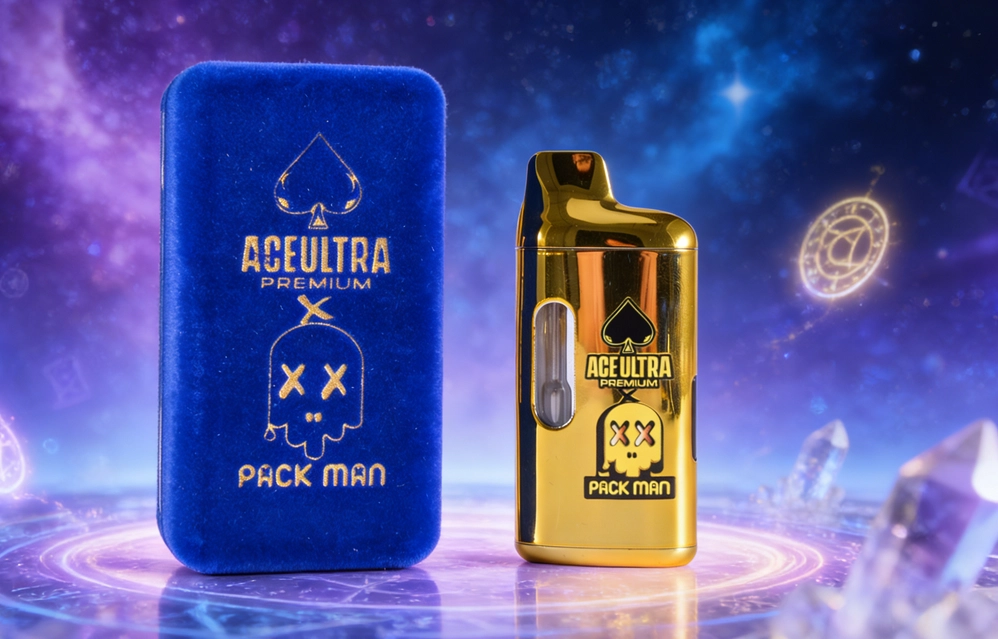
ACE Packman V2 (Empty Device) — A Technical Playbook for B2B Buyers
Keyword: ace packman v2 · Focus: engineering, performance, and test methods (no legal/regulatory content)
TL;DR — Treat ace packman v2 as a ceramic-coil, draw-activated platform you can tune for consistency, runtime, and leak resistance. Validate with standardized vaping regimes (ISO/CORESTA) for comparable data, stress the hardware with temperature-cycle and transit simulations, and spec USB-C components with proven durability.
1) Test Methodology that Produces Comparable Numbers
When you benchmark ace packman v2, keep one “reference” regime constant so lots, vendors, and time windows remain comparable. The common baseline is the ISO routine regime: 55 mL puff volume, 3 s duration, 30 s interval. Use it to report TPM (total particulate matter), pressure drop, and coil temperature behavior in a consistent way. :contentReference[oaicite:0]{index=0}
For higher-airflow devices, also run a complementary high-flow regime, because CORESTA shows that the traditional 55 mL/3 s setting can overheat or mischaracterize modern designs. Select flow, duration, and activation thresholds that align with puff-activated trigger requirements and realistic consumer draws; document both regimes side-by-side in your reports. :contentReference[oaicite:1]{index=1}
2) Aerosol & Flavor Consistency: Coil, Flow, and Regimes
What to tune: ceramic micro-porosity (liquid film stability), inlet count & diameter (e.g., 4–6 ports × ~1.5–1.6 mm), target coil resistance (~1.2–1.6 Ω), and the draw-activation threshold. Characterize TPM (mg/puff) and pressure drop with the ISO baseline, then validate flavor stability and depletion behavior under a higher-flow regime per CORESTA guidance. This dual-regime approach avoids “apples vs oranges” comparisons and reduces risk of hot-coil artifacts that skew taste. :contentReference[oaicite:2]{index=2}
3) Runtime & “Puff Count”: Battery, Power, and Temperature
Model the energy path (not just mAh). Puff energy ≈ average power × puff duration; average power ≈ V²/R moderated by duty cycle and firmware limits. Build a runtime tracker that logs voltage sag under load and duty-cycle behavior across a full depletion to convert “mAh” into “useful puffs” at your chosen regime. Then test at cold and room temperatures—peer-reviewed lithium studies show capacity and internal resistance are strongly temperature-dependent, which explains winter “weak hit” perceptions. :contentReference[oaicite:3]{index=3}
4) Anti-Leak Stack: Seals, Tolerances, and Environment
Ship-ready hardware needs a sealing stack that survives thermal swings and pressure differentials. Run temperature-cycle tests (e.g., −20 °C↔60 °C steps with dwell) to expose seal shrinkage, micro-gapping, and stress points in the reservoir and window interface; IEC’s temperature-change method is a recognized way to screen such problems on compact electronics. :contentReference[oaicite:4]{index=4}
Practical screen: build a 3-stage leak screen—(1) 24 h room-temp static; (2) temperature-cycling; (3) post-cycle resting and re-weigh. Correlate mass gain/loss with visual seepage and wicking behavior to catch legitimate vs. cosmetic issues.
5) Draw Sensor & UX (LED/Screen) that Actually Help Stores
For ace packman v2, a reliable puff-activated sensor and readable UX reduce returns more than flashy animations. CORESTA emphasizes that puff-activated systems require a minimum flow for activation—document your trigger flow, onset delay, and false-trigger immunity. If you include a screen, map low-battery and fault codes (short/over-temp) to real store-level troubleshooting outcomes. :contentReference[oaicite:5]{index=5}
6) USB-C Details: Fast-Charge Compatibility & Connector Life
Specify a USB-C receptacle with proven durability: the USB-IF Type-C spec cites a 10,000 mating-cycle durability class for the connector family. Selecting reputable components (and published cycle data) reduces mechanical intermittents after weeks on display bars or sample tables. :contentReference[oaicite:6]{index=6}
Suppliers such as Molex document robust Type-C parts with cycle ratings at or above 10,000 insertions; use these datasheets in your BOM gate and incoming QC. :contentReference[oaicite:7]{index=7}
7) Packaging & Transit Robustness for Lower DOA
Protect the device with tray/clam-shell locators, desiccant, and crush-resistant outers. Validate with an e-commerce small-parcel simulation like ISTA 3A, which combines random vibration, drop heights, and conditioning states representative of typical parcel networks; align pass/fail with your acceptable cosmetic and functional criteria. :contentReference[oaicite:8]{index=8}
8) Pilot Targets & QC Checklist (Ready-to-Use)
Use the following spec targets to launch a 200–500 pc pilot for ace packman v2. Tune to your liquid viscosity and local climate; these are engineering start points, not brand claims.
| Subsystem | Pilot Target | How to Verify |
|---|---|---|
| Ceramic & Inlets | 4–6 inlets × ~1.5–1.6 mm; coil ~1.2–1.6 Ω | Report TPM & pressure drop under ISO regime + a high-flow regime. :contentReference[oaicite:9]{index=9} |
| Draw-Activation | Trigger flow tuned to intended MTL draw; onset <200 ms | CORESTA-guided flow selection & trigger mapping. :contentReference[oaicite:10]{index=10} |
| Runtime | “Useful puffs” logged at both regimes; cold/RT delta <20% | Energy/power trace + cold-room runs; lithium temp-dependence baseline. :contentReference[oaicite:11]{index=11} |
| Temperature-Cycle Screen | Pass −20↔60 °C change-of-temperature without seepage | IEC change-of-temperature method (dwell + re-weigh, visual). :contentReference[oaicite:12]{index=12} |
| Connector | USB-C with ≥10,000 mating cycles; stable retention force | Connector family spec + vendor datasheet. :contentReference[oaicite:13]{index=13} |
| Transit Robustness | ISTA 3A pass at intended packout | 3A random vibration + drop + conditioning; define cosmetic/functional limits. :contentReference[oaicite:14]{index=14} |
9) Quick FAQ for ace packman v2 (B2B)
Q1. How do I compare two vendors’ “puff counts” fairly?
A: Log puff energy and duty cycle at a fixed regime (ISO 55 mL/3 s/30 s), then repeat at a realistic high-flow regime. Publish both. :contentReference[oaicite:15]{index=15}
Q2. Why does winter make the device feel weaker?
A: Lithium cells lose deliverable power at low temperature due to higher internal resistance and reduced kinetics—expect lower initial power and shorter steady-state puffs unless firmware compensates. :contentReference[oaicite:16]{index=16}
Q3. What single change most reduces returns?
A: Tighten the activation threshold window (no “dead draws”), verify with trigger-flow mapping, and run temperature-cycling plus an ISTA parcel simulation to catch leak-through and structural shifts before mass ship. :contentReference[oaicite:17]{index=17}
::contentReference[oaicite:24]{index=24}
People can find vape bulk in following pages: ace packman wholesale | wholesale ace packman disposable | custom 2ml thc vape
0 Comments